The Spirit of Rei in Karatedo: More Than a Ritual, a Foundation for Growth
Martial Arts & Philosophy · Approximately 6 minutes’ read
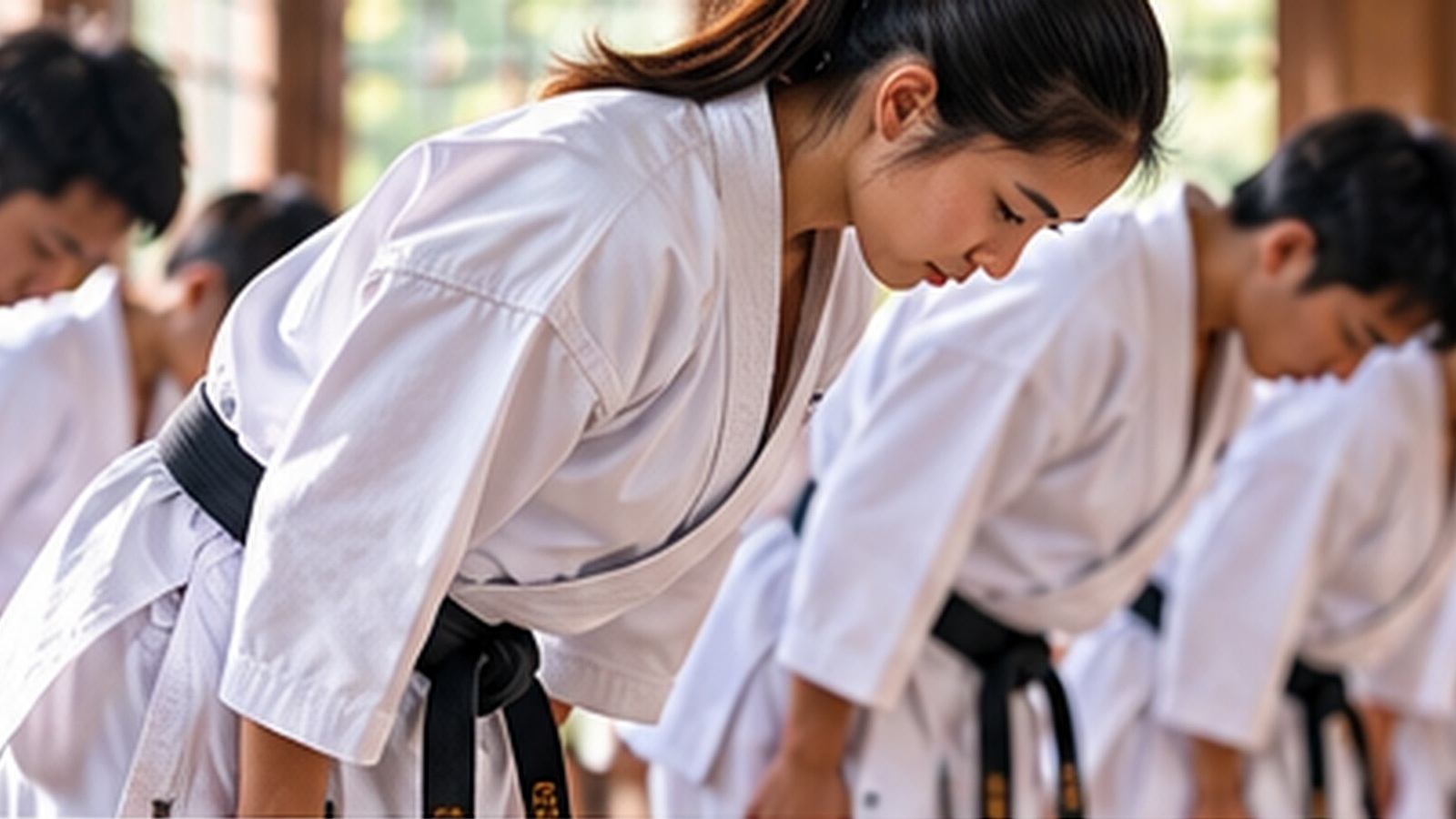
In Karatedo, there are small things repeated in almost every training session: straightening one’s uniform, lining up, remaining silent while listening to instruction, and bowing before beginning. New students may sometimes see these as ceremonial elements separate from technique. But the longer one trains, the more one recognises that these seemingly small details form an important part of the martial way.
Rei, in the context of Japanese martial arts, can be understood as courtesy, etiquette, proper conduct and a spirit of respect. Bowing is the most visible expression of Rei, but Rei does not end when practitioners raise their heads. It continues in how we listen, control our strength, treat our training partners, and respond in victory or defeat.
Bowing does not make practitioners smaller
Bowing to one’s instructor, training partner or dojo does not mean diminishing oneself. On the contrary, it is a moment in which practitioners consciously set aside their ego and enter training with a willingness to learn.
In everyday life, people often want to prove that they are right, strong or capable. In the dojo, Rei creates a necessary pause. That pause reminds practitioners that technique only truly has meaning when accompanied by self-control.
A karateka may be able to execute a very powerful technique, but if they do not know when to stop, cannot protect their training partner, or look down on those with less experience, that strength does not yet represent maturity.
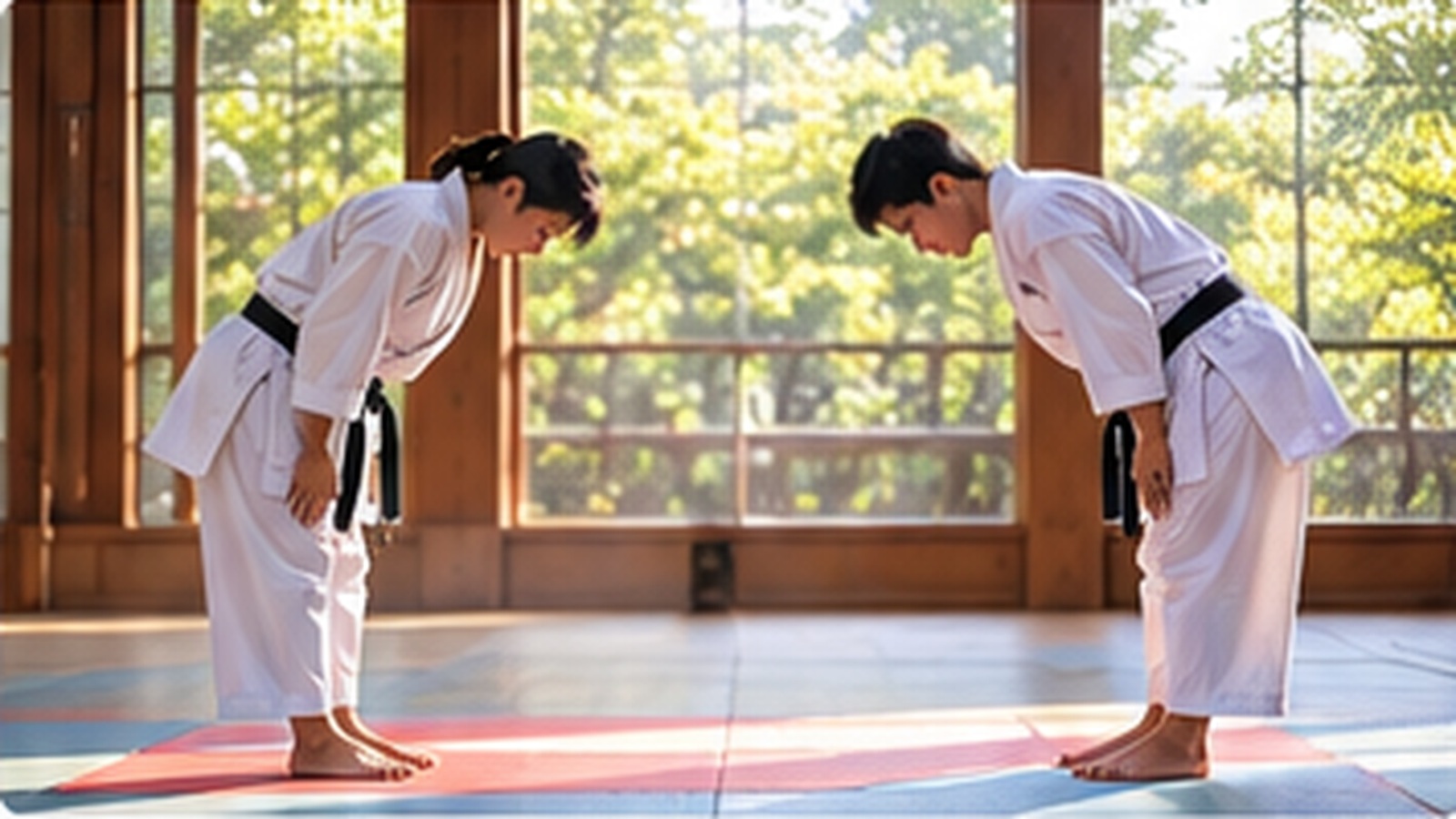
Respect is expressed through concrete actions
Rei is not limited to words or to the rituals at the beginning and end of a training session. During practice, this spirit can be seen in specific actions:
- Arriving on time and keeping one’s uniform clean.
- Paying attention while others are giving instruction.
- Not making light of a training partner while they are performing a technique.
- Controlling one’s power during sparring.
- Knowing how to thank those who have helped one improve.
Especially in kumite, the person standing opposite is not an “enemy”. They are the person who helps us test distance, speed, reflexes and emotional control. Without training partners, practitioners cannot develop many of the important qualities involved in fighting. A match may therefore be highly competitive while still requiring respect before, during and after competition.
Rei is also reflected in how advanced practitioners treat newcomers. A higher rank is not for receiving more privileges, but for assuming greater responsibility: setting a better example, being more patient, exercising greater control and supporting the next generation.
A black belt is a milestone, not an endpoint
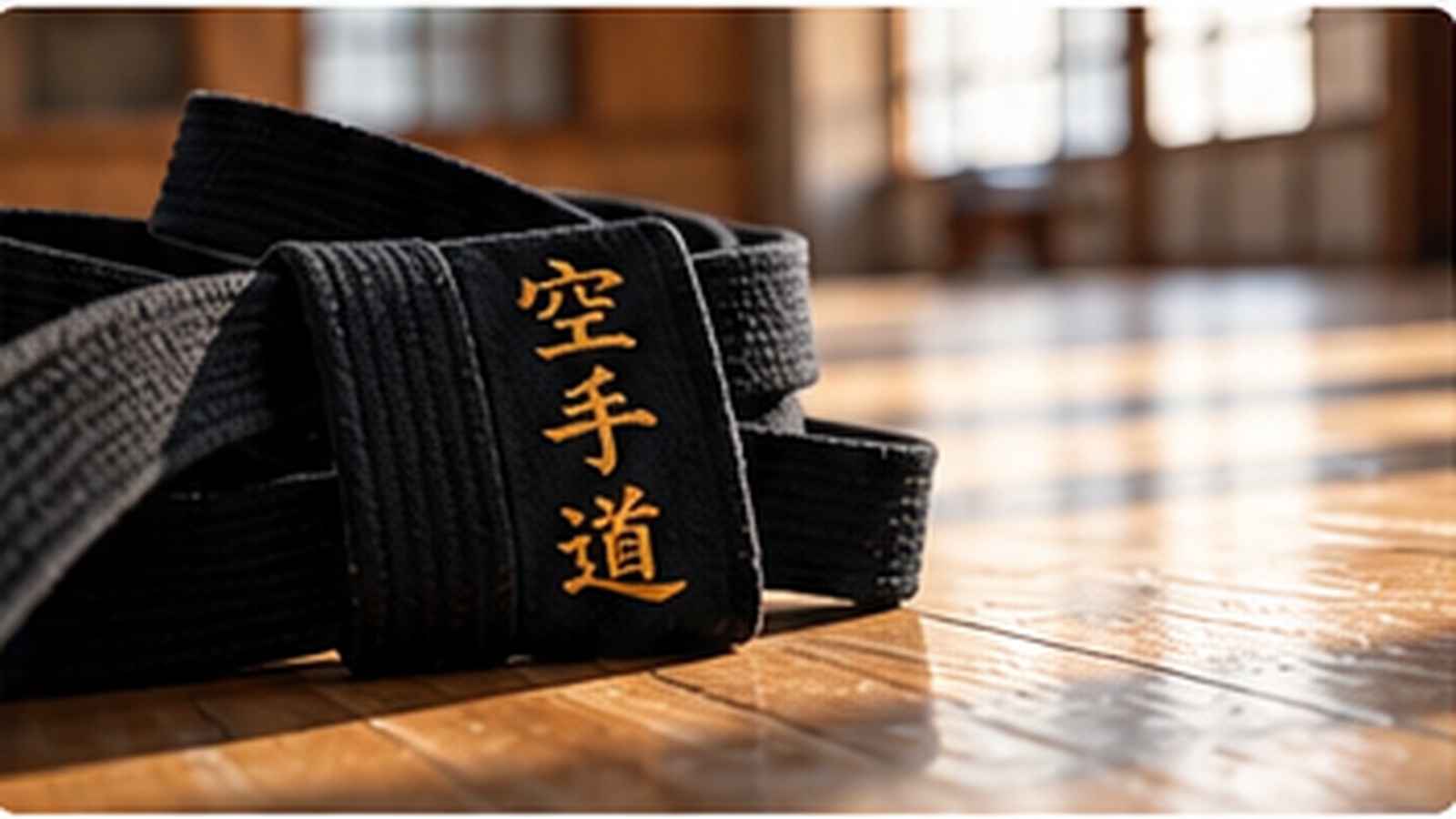
A common misconception among those outside the dojo is to see a black belt as a final destination. For long-term practitioners, however, a black belt is often a milestone that serves as a reminder that the path of learning remains long. Technique can be refined day by day, and so can character.
There are days when practitioners can control their anger, and days when they cannot. There are times when they maintain humility, and times when the ego reappears. The martial way does not demand perfection, but it does ask practitioners to observe themselves and continue to improve.
Taking Rei beyond the dojo
The value of martial arts philosophy becomes truly clear only when it accompanies practitioners beyond the training floor. Those who understand Rei do not simply bow correctly in the dojo; they also know how to listen in meetings, keep promises, respect service staff, remain calm in disagreements and thank those who have helped them.
From this perspective, Karatedo does more than develop self-defence skills. The dojo creates an environment in which practitioners can repeatedly practise positive habits of conduct until they become a natural part of their character.
Maturity rarely comes from a single great moment. More often, it is shaped by thousands of small actions: arriving at training on time, restraining one’s anger, taking the initiative to apologise, or making a bow with genuine awareness rather than simply out of habit.
Learning to bow in order to stand more firmly
Karatedo may begin with learning stances, punches, kicks or kata. But the further practitioners progress, the more they understand that the most difficult thing to develop lies not in the muscles, but in how they use their strength and how they treat others.
Rei is therefore not a decorative element of Karatedo. It is a constant reminder: the higher one’s technique, the greater one’s self-control must be; the stronger one’s fighting ability, the greater one’s responsibility towards others.
A bow lasts only a few seconds. But when practitioners understand its meaning, its lesson can remain with them throughout their lives.
Comments